
What’s in a name? That which we call a rose by any other name would smell just as sweet.”
So declares Juliet as she laments the name of her beloved Romeo. Shakespeare is right that names are only one part of the tapestry that makes us who we are – but they do matter. With less than a week to go until I set off for Istanbul, I’ve been reflecting on what my name means to me.
More than labels, names are deeply woven into our sense of self. They stir emotions, foster connections, and anchor identity throughout a lifetime. Our brains are wired to respond strongly to the sound of our own name – like most people, I love hearing my name spoken. How we feel about ourselves and the names that people call us are inextricably linked, which is why ‘name calling’ is hurtful.
The connection between name and identity is so profound that attempts to disempower people often begin with eradicating their names. Having your name stripped and replaced with a number in prison is, by design, a degrading experience. Perhaps even worse is not having a name to begin with. I’ll never forget the shock and sadness, back in my teaching days, of hearing of a child who started school without knowing his own name – whether because he wasn’t spoken to or was referred to by something unspeakable wasn’t clear. The importance of a name – like love – can perhaps be felt more keenly in its absence.
Remember the public vote in 2016 (no, not that one!) to name the shiny new £200m polar research ship? The winner by a landslide – Boaty McBoatface – was soon sunk by the authorities. Two of Scotland’s gritters, however – Sleetwood Mac and Gritney Spears -were not saved from the Scottish public’s sense of humour. Wha’s like us?
My relationship with my own name is complicated. There are things I love about it: that my Grandad chose it, that it means dawn in Farsi for the time of day I was born, its shape in written form. It moves me to hear it sung in Nusrat Fateh Ali Khan’s magnificent voice in qawwali (Sufi devotional music): ‘The day is ecstatic, so is the night, the dawn and the evening’. The instruction it gives to my character is something to aspire to: to be, as the dawn, bright and hopeful, a symbol of awakening, the coming of light from the darkness. It’s lovely that there are poems written about it:
An angel, robed in spotless white,
Bent down and kissed the sleeping Night.
Night woke to blush; the sprite was gone.
Men saw the blush and called it Dawn.
–Dawn by Paul Laurence Dunbar
Yet, it is complicated by the pronunciation. I have created different versions of how to say my name, and even I no longer know which is the ‘right’ one. This is my own doing, and I’m more uneasy about it now than I used to be. Saying my own name differently depending on who I’m talking to feels like a dysfunctional relationship to have with something so central to my identity.
‘Happy New Year, Sahir! Hey, that rhymes!’ texted a new friend this year. And it took a few seconds for me to remember: ‘ah yes, to your ear, it does’. To mine, I still most often hear the ‘Sa-hur’ of my Scottish childhood, even though for many years I have introduced myself as ‘Sa-heer’.
At university in England, I first learned that my name could be tricky to pronounce. I quickly grew to dread the faces screwed up in confusion. I felt acutely embarrassed at being an inconvenience, and like a failure for getting stuck at the first hurdle when meeting new people. If they couldn’t say my name, did I belong here? Did I even still exist? Overcome with such uncomfortable thoughts and feelings, I chose the path of least resistance and adopted the new version, which everyone could say, and which has followed me ever since.
I could insist on the original pronunciation; after all, if people can learn to say Tchaikovsky and Daenerys Targaryen, surely they can learn to say Sahir. I’m suspended between craving the coherence of one accepted pronunciation on one hand and making it as easy for people to say my name on the other, however they say it. For now, the latter is what is remains most important to me. To anyone who knows me: keep saying my name and say it often, however you say it! For the rest, I’ll pack this unresolved dilemma to take with me on the road.
Learning to inhabit your own name is one thing; the weight of choosing a name for your children is another level. When our first child was born, we took one look at him and knew straight away that the name we had chosen wasn’t him; we’d got it wrong! So we picked another one.
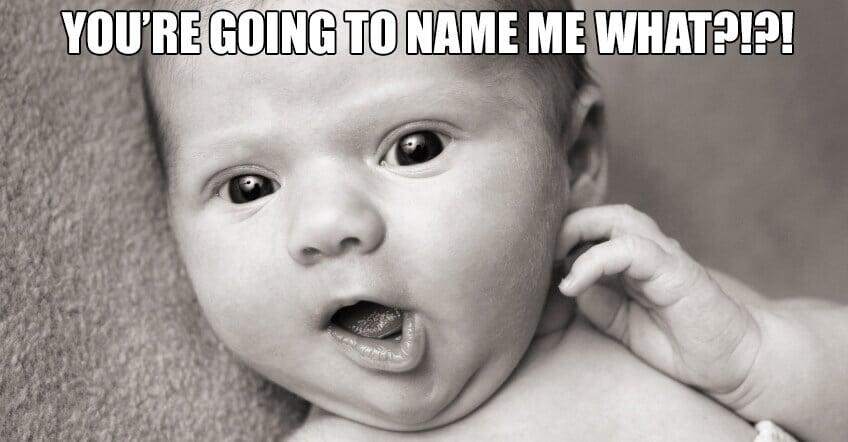
The weight of that early parental decision was made heavier by research that shows the real effect names can have on our professional lives. A recent episode of Sideways on Radio 4 profiled research that found a correlation between an unusual CEO name and an unusual company strategy.
It was reassuring to learn, in that same episode, that studies show that our relationships with our names change throughout our life. When we are little, it’s difficult to imagine someone being the same if their name changes. When we are teenagers, we question how well our name suits our identity. When we get older, the relationship to our name weakens. Other factors construct our identities and our name becomes less important. It is reassuring that you can ‘grow into’ a name.
My name has meaning for me because it was chosen for me, out of love. It exerts an invisible but powerful gravitational pull to anchor me to who I am and the hopes my family had for me when I was born. My name is only a part of me, but it matters, and it’s mine. I just need to work how to fully grow into it.
 SASA on the move